 how-to
How to Clean Artificial Turf: A Practical Step-by-Step Guide
Last Updated: November 1, 2026
Quick Summary
To clean artificial turf, remove large debris by hand or with a leaf blower, rinse the surface with a garden hose, brush against the grain with a stiff broom, rinse again and let it dry fully. Pet areas should be rinsed promptly with plain water to limit odor.
- Pick up leaves, sticks and trash before rinsing the surface.
- Brush against the grain to lift blades and loosen matted debris.
- Rinse a second time so loosened dirt does not settle back in.
- Use plain water for most pet messes and avoid bleach and strong ammonia products.
- Call a professional for standing water, persistent odor or hard-packed infill.
Table of Contents
- What Dirt, Debris and Stains Typically Build Up on Residential Turf
- Step-by-Step: Routine Cleaning With a Hose and Brush
- How to Clean Artificial Turf With Pets and Remove Odor
- Artificial Turf Deep Cleaning and When to Call a Professional
- Artificial Turf Maintenance Tips to Prevent Weeds and Infill Compaction
- Booking Your Turf Cleaning or Site Evaluation With Artificial Turf Atlanta
- Frequently Asked Questions
Keeping clean artificial turf is one of the simplest ways to protect your investment. Artificial turf is generally easier to keep up than natural grass, and the routine is simpler than most homeowners expect. Pollen, pet waste, leaves and dust settle on the surface over time, and a regular cleaning schedule keeps the turf looking fresh and draining well.
What Dirt, Debris and Stains Typically Build Up on Residential Turf
Most residential turf collects the same handful of materials. Leaves, pine needles, grass clippings, pollen and dust settle on top. Over time, fine dirt works its way down into the fibers and infill. Pet urine and food spills leave stains and odor, especially in shaded spots where moisture lingers.
Georgia yards add a few local challenges. Red clay soil can track onto the turf after rain. Heavy spring pollen can coat the surface in a yellow film. Mature trees in shaded yards drop debris year-round.
- Leaves and pine needles, which trap moisture
- Pollen and fine dust, which dull the color
- Pet waste and urine, which cause odor
- Mud and clay tracked in after storms
- Food, drink and grease spills from outdoor gatherings
A quick walk across the lawn each week helps you catch these problems early.
Step-by-Step: Routine Cleaning With a Hose and Brush
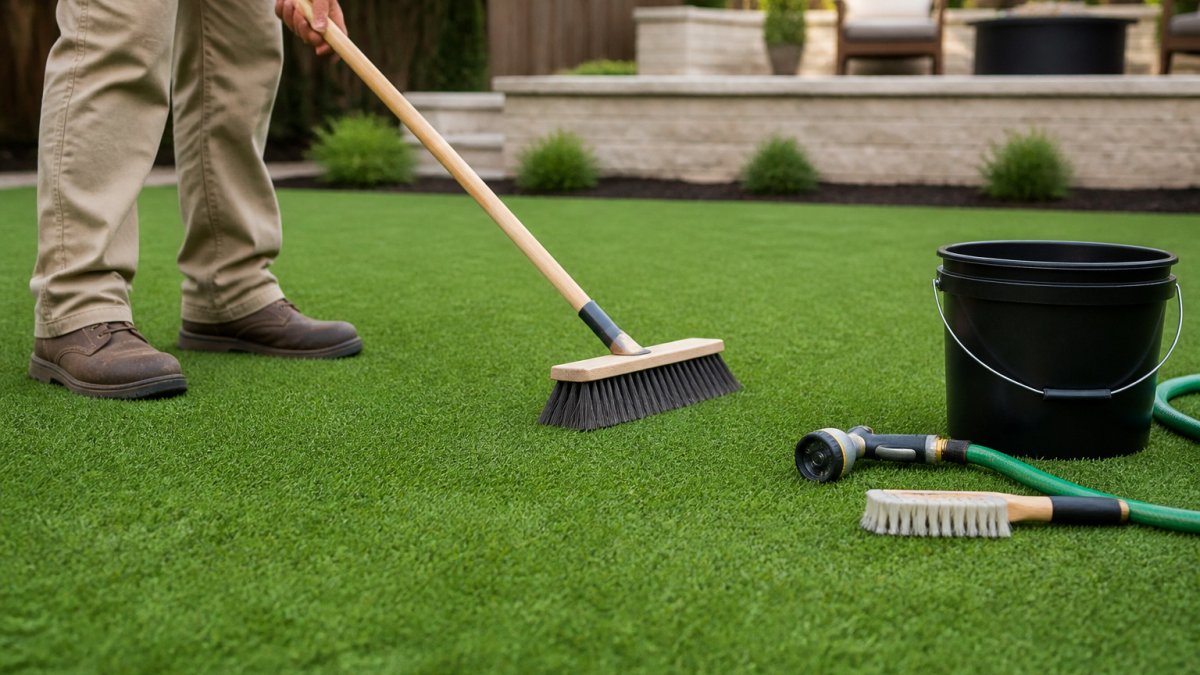
For most yards, a garden hose and a stiff push broom handle routine cleaning. For a more detailed maintenance guide on cleaning your artificial turf, you can follow along with the full process.
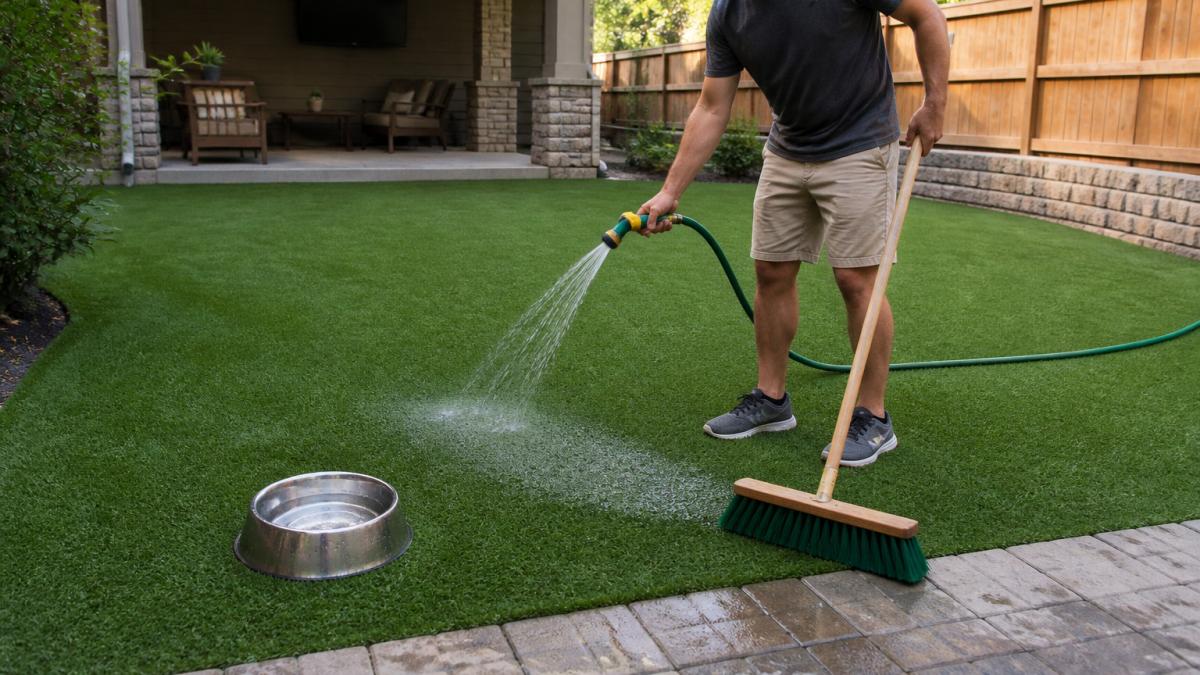
- Remove large debris. Pick up leaves, sticks and trash by hand or with a leaf blower.
- Rinse the surface. Use a garden hose to wash dust and pollen out of the fibers.
- Brush against the grain. A stiff broom lifts the blades and loosens matted debris.
- Rinse again. Flush away loosened dirt so it does not settle back in.
- Let it dry. Allow the turf to dry fully before heavy foot traffic.
Expected result: The turf should look evenly colored, with blades standing upright and no visible film of dust.
The routine cleaning steps are easy to follow, and this table lists each one with what it covers. For a detailed how-to cleaning guide to keep handy while you work, see our full instructions.
| Step | What to do | Note |
|---|---|---|
| Remove large debris | Pick up leaves, sticks and trash | By hand or with a leaf blower |
| Rinse the surface | Wash dust and pollen out of the fibers | Use a garden hose |
| Brush against the grain | Lift blades and loosen matted debris | Use a stiff broom |
| Rinse again | Flush away loosened dirt | Keeps dirt from settling back in |
| Let it dry | Allow the turf to dry fully | Before heavy foot traffic |
How to Clean Artificial Turf With Pets and Remove Odor
Pet areas need extra attention. Urine can leave an ammonia smell that gets stronger in warm, humid weather, so rinse these spots right away rather than waiting for your regular cleaning day.
Start by flushing the area with plain water. Then brush the spot and rinse again. A light, regular rinse is generally a practical way to limit odor between deeper cleanings.
Keep your routine simple:
- Rinse pet areas every few days
- Pick up solid waste promptly and rinse the spot
- Brush the area to keep fibers from matting
- Check drainage so urine does not pool under the turf
For households with dogs, pet-specific turf products are available for those who want a surface built with pet use in mind.
Choosing Pet-Friendly Cleaning Solutions
Plain water handles most pet messes. When you need something stronger, choose a cleaner labeled safe for synthetic turf and pets. Avoid harsh chemicals, bleach and strong ammonia-based products. These can damage the fibers, fade the color and leave residues that attract more odor.
Always test any new cleaner on a small, hidden area first. Rinse thoroughly after use so no residue remains for pets to lick or walk through.
Artificial Turf Deep Cleaning and When to Call a Professional
Routine cleaning handles surface dirt, but some jobs need more. Deep cleaning helps with heavy staining, compacted infill, or odor that does not clear up after rinsing. In those cases, professional maintenance can save time and prevent damage.
Call a professional if you notice standing water after rain, persistent odor, flattened fibers that will not stand back up, or infill that has packed down hard. You can review our professional artificial turf maintenance service to see what a deep cleaning involves. A professional can check drainage, rejuvenate the fibers and restore infill depth. Our maintenance, cleaning and rejuvenation services for existing synthetic turf can handle these deeper jobs for homeowners who prefer not to do them alone.
Artificial Turf Maintenance Tips to Prevent Weeds and Infill Compaction
Good habits prevent most problems. Weeds can sprout through seams, edges and any spot where debris has collected. Pull them as soon as you see them, and keep leaves and organic matter off the surface.
Infill, the granular material between the blades, can compact over time. Brushing the turf lifts the infill and keeps the surface even. Compaction commonly appears in high-traffic paths and play areas, so these spots deserve a closer look every season. Heavily used zones like kids' play areas may benefit from our Play Area Turf options.
If you notice ripples or raised edges, address them early. Our guide on repairing ripples in your turf explains the common causes and fixes.
Keep these habits in your routine:
- Remove weeds as soon as they appear
- Brush high-traffic areas to redistribute infill
- Clear leaves and debris promptly
- Check edges and seams after storms
Booking Your Turf Cleaning or Site Evaluation With Artificial Turf Atlanta
If you want help keeping your turf in top condition, or you are not sure whether your yard needs a cleaning or a repair, we can help. A professional can look at your turf, explain what it needs, and answer your questions about the right maintenance schedule for your property.
You can contact Artificial Turf Atlanta to request a cleaning or a site evaluation. Artificial Turf Atlanta serves homeowners throughout the greater Atlanta area.
Frequently Asked Questions
How do you clean artificial turf?
Start by removing leaves, sticks and loose debris with a leaf blower or stiff rake. Next, rinse the surface thoroughly with a garden hose to flush out dust and pollen. Brush the blades in the direction of the grain with a stiff push broom to lift matted fibers. For stubborn spots, use a mild soap solution, rinse well afterward and let the turf dry. Regular light cleaning every few weeks keeps buildup from settling into the infill.
Can you use a hose to clean artificial turf?
Yes. A garden hose is the most effective tool for routine artificial turf cleaning. It flushes dust, pollen and light debris out of the fibers and helps prevent odor-causing material from building up. Use a spray nozzle on a gentle setting rather than a high-pressure stream, which can disturb the infill and loosen edges over time. Rinsing also helps the turf drain properly after heavy Georgia rain.
How often should artificial turf be cleaned?
For most Metro Atlanta yards, a light rinse every one to two weeks works well, especially in spring when pollen is heavy. Homes with dogs usually need more frequent spot cleaning, often after each heavy use area is visited. A deeper cleaning with brushing and a cleaning solution is typically best once or twice a year. Your exact schedule depends on shade, tree cover, pet traffic and how much debris your yard collects.
When should artificial turf be professionally cleaned?
Consider a professional cleaning when odor persists after routine rinsing, when stains will not lift, when infill has compacted or when weeds and moss are appearing through the surface. Professional service is also worth considering if drainage seems slow after rain, which can point to clogged infill or a grading issue. Artificial Turf Atlanta offers cleaning, maintenance and rejuvenation services for existing synthetic turf, and a site visit can assess your yard.