 how-to
How to Build the Base Before Laying Artificial Turf
Last Updated: October 30, 2026
Quick Summary
A proper artificial turf base is built in layers: compacted subgrade, a drainage layer where water must move, a compacted crushed granite aggregate base, and a permeable weed barrier under the turf. Roughly 4 inches of prepared base is a common starting point, but depth varies with the turf product, infill, traffic and drainage.
- Crushed granite or comparable hard stone is the most common artificial turf base material.
- Stone gradation matters as much as stone type; dirty mixes with fine dust hold water.
- Build the base in shallow lifts and compact each one with overlapping plate compactor passes.
- Georgia clay does not drain, so water needs a path such as slotted pipe or a French drain.
- A site evaluation checks soil type, drainage, grade, equipment access and how you use the space.
Table of Contents
- What Goes Under Artificial Turf and Why It Matters
- Choosing the Right Artificial Turf Base Material
- How Deep to Dig: Artificial Turf Installation Base Depth
- Building an Artificial Turf Drainage Base That Works
- Compacting the Base for Artificial Grass: The Step Most People Rush
- Request a Site Evaluation for Your Turf Project
- Frequently Asked Questions
What Goes Under Artificial Turf and Why It Matters
Before any synthetic turf goes down, a properly built base goes in. That base is the foundation of the entire installation, and it is what separates a lawn that drains and holds up from one that ripples, sinks, or turns into a mud pit after a Georgia downpour.
The turf is the easy part. The base is the work. You can see the finished results in our gallery.
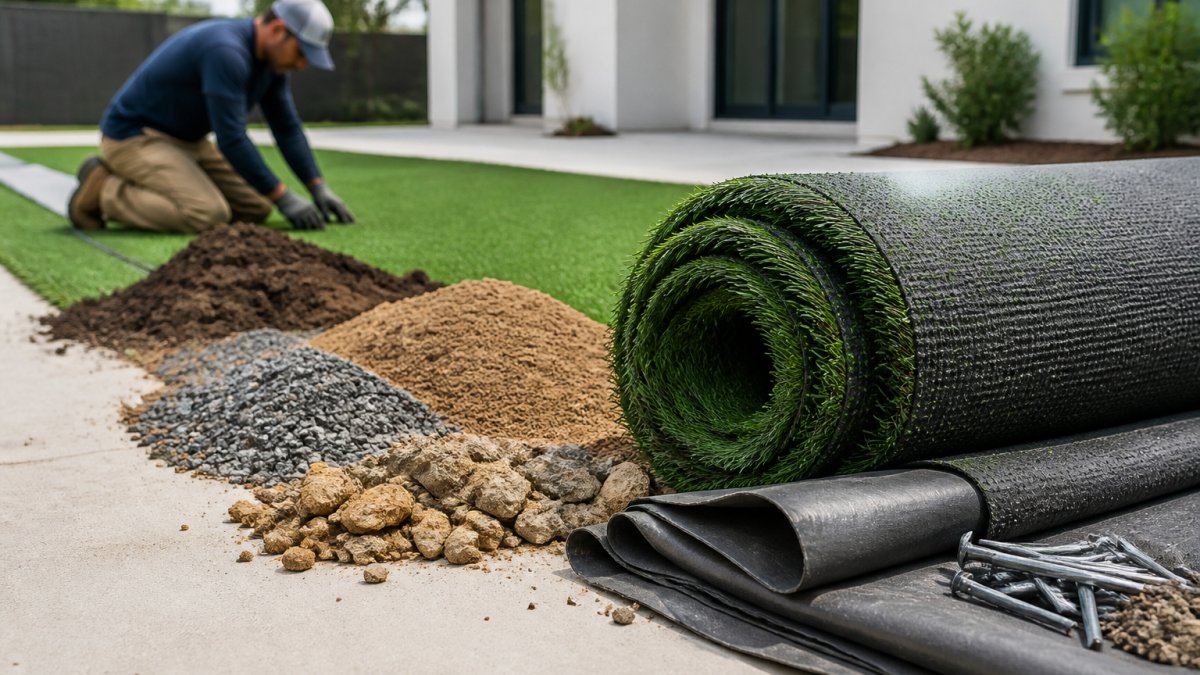
Here is what typically goes under artificial turf, from the soil up:
- Compacted subgrade: the native soil, graded and leveled
- Drainage layer: slotted pipe or a free-draining aggregate where water needs to move
- Aggregate base: typically crushed granite or a similar compacted stone
- Weed barrier: a permeable fabric over the base
- The turf itself: cut, seamed, edged, and infilled
Each layer does a job. Skip one, and the others fail.
The base is what supports foot traffic, keeps the surface flat, and lets rain pass through instead of pooling. In Atlanta's red clay, that last part matters more than almost anywhere else. Clay holds water. Without a properly built base and drainage plan, that water has nowhere to go.
Here is the layer-by-layer build-up that sits under a finished artificial turf surface.
| Layer | What it is |
|---|---|
| Compacted subgrade | Native soil, graded and leveled |
| Drainage layer | Slotted pipe or free-draining aggregate where water must move |
| Aggregate base | Typically crushed granite or similar compacted stone |
| Weed barrier | Permeable fabric over the base |
| The turf itself | Cut, seamed, edged, and infilled |
Choosing the Right Artificial Turf Base Material
The most common artificial turf base material is crushed aggregate, usually granite or a comparable hard stone, screened to a consistent size and compacted in lifts. It drains well, locks together under compaction, and gives the turf a firm, even surface.
A few materials come up in conversation, and they are not equal:
- Crushed granite or decomposed granite: the standard choice for most residential installs. Drains well and compacts hard.
- Crushed stone with fines: good stability, but the fines can slow drainage if the mix is too dirty.
- Washed concrete sand: used in some putting green builds, not ideal as a standalone base for general turf.
- Class II road base: acceptable in some applications, but quality varies by supplier.
What most guides miss is that the gradation of the stone matters as much as the type. A clean, well-graded aggregate compacts into a stable mat. A dirty mix with too much fine dust turns into a barrier that holds water.
A pet area, a putting green, and a pool surround all put different demands on the base, and the spec should reflect that. If you are still deciding whether to hire a professional, read more about why to go artificial in Atlanta.
How Deep to Dig: Artificial Turf Installation Base Depth
A prepared base of roughly 4 inches is a common starting point, but that number is not a rule. The right artificial turf installation base depth depends on the turf product, the infill, the traffic, and what is happening with drainage and grade on your property.
Here is how the depth breaks down in practice:
- Turf pile height and infill set the minimum. A thicker turf with more infill needs more room.
- Drainage requirements can push the base deeper, especially on flat lots or heavy clay.
- Existing grade may require extra excavation to correct a slope or a low spot.
- Application changes things. A putting green or a high-traffic play area often calls for a more substantial build than a light-use landscape strip.
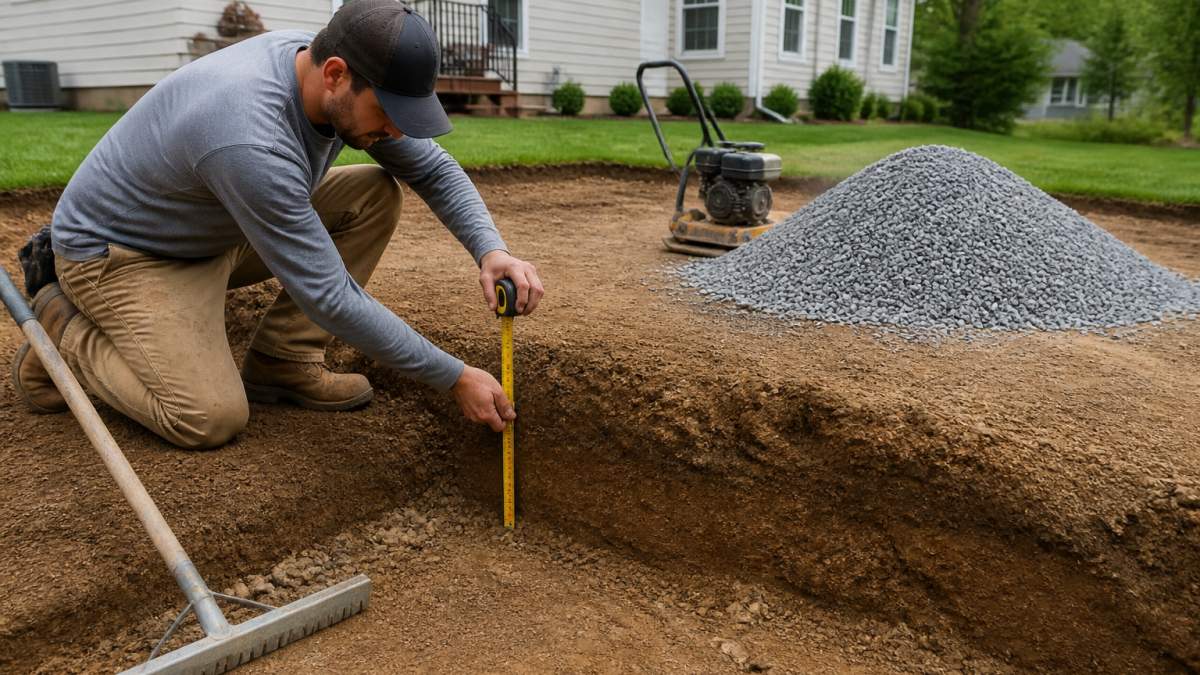
Digging too shallow to save time is a common mistake. To see the full scope of a professional artificial lawn installation in Atlanta, explore our project examples. It leaves no room for proper compaction, and the surface can sink or ripple within a season.
Building an Artificial Turf Drainage Base That Works
An artificial turf drainage base is the layer that lets water move through and away instead of sitting under the surface. Get it wrong, and the result can be mud, pooling, and a lawn that never dries out.
Georgia clay makes this the hard part. Clay does not drain. Water that hits it will sit there unless you give it a path.
How drainage is typically approached:
- Assess the slope first. Water needs somewhere to go, and the grade should send it there.
- Use free-draining aggregate. Clean stone lets water pass; dirty stone blocks it.
- Add drainage where needed. Slotted pipe or a French drain may be required on flat or low-lying areas.
- Never rely on the turf alone. Synthetic turf is permeable, but it cannot fix a yard with no outlet.
Turf does not solve every drainage problem. Some properties need grading work or a drainage system before turf is even on the table, which is why drainage and grading should be assessed as part of the installation.
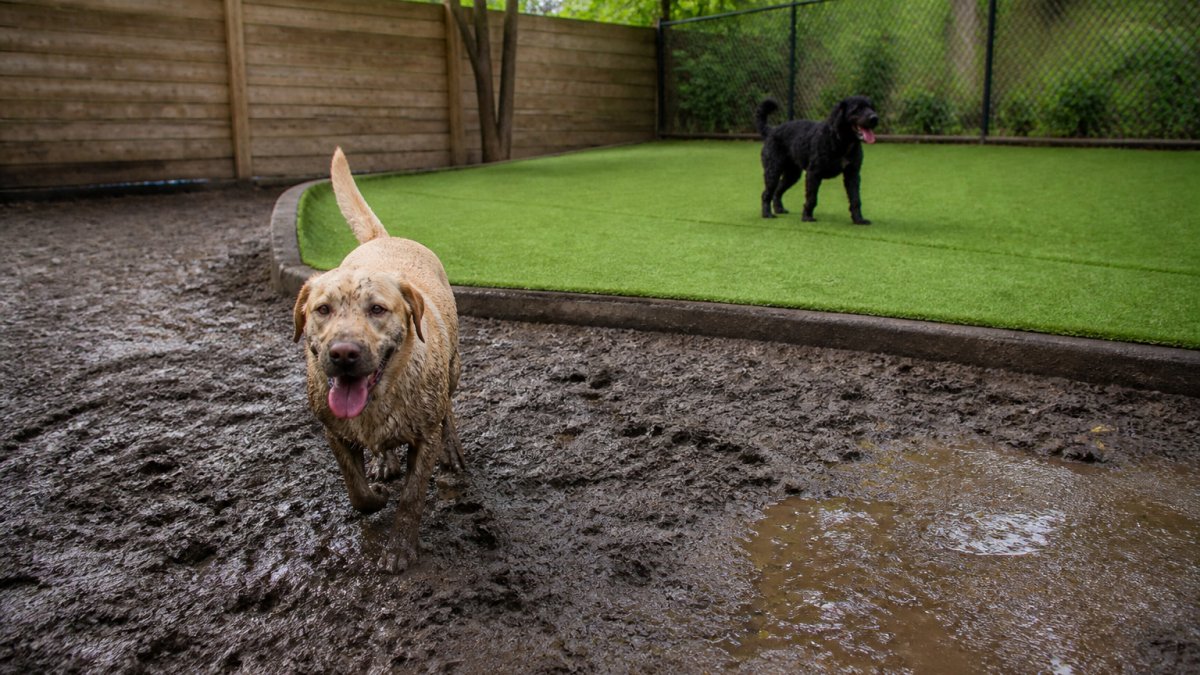
For homeowners dealing with a soggy, muddy yard, this is the section to pay attention to. Drainage is not a detail. It is the reason some installs last and others do not.
Compacting the Base for Artificial Grass: The Step Most People Rush
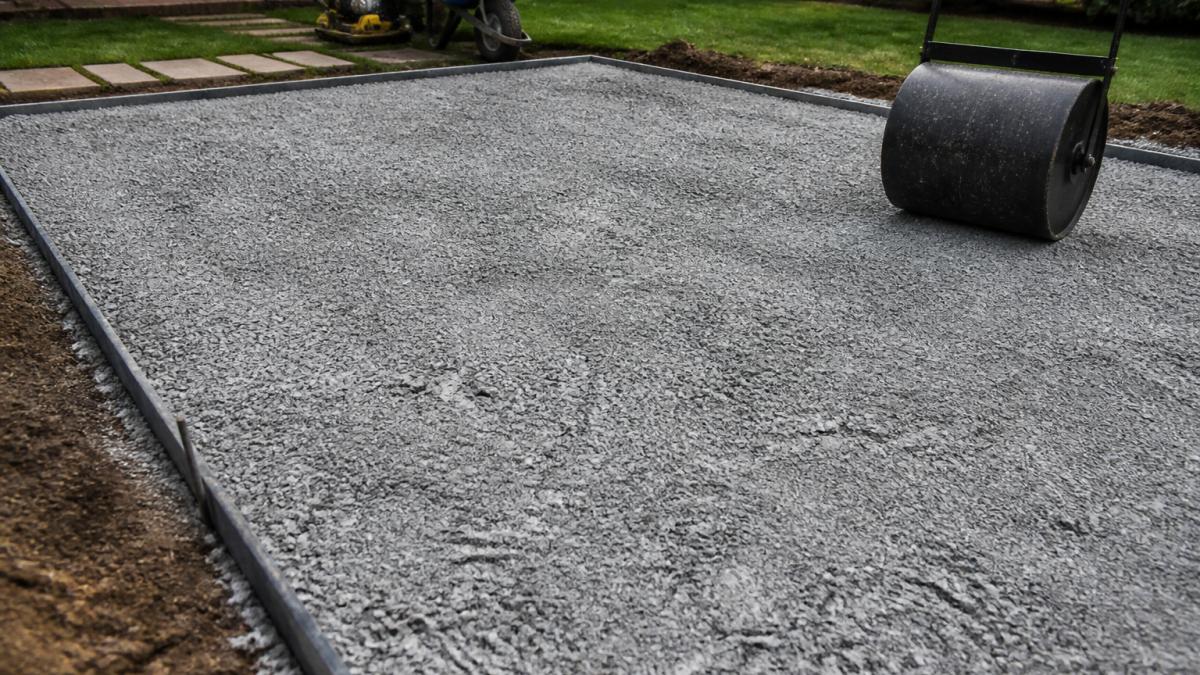
Compacting the base for artificial grass is the step that turns loose stone into a solid, stable surface. It is also the step most often rushed, and it is the one that shows up later as dips, wrinkles, and seams that pull apart.
Proper compaction means working in shallow lifts, wetting the stone lightly, and running a plate compactor over it in overlapping passes until it stops moving. Then you check it. Then you do it again.
A common mistake is dumping all the stone at once and hitting it with a compactor once. That leaves soft spots underneath. The surface feels fine for a few weeks, then it does not.
Common problems on rushed jobs include:
- Soft, uneven spots that show up as the turf settles
- Seams that separate because the base shifted
- Low areas where water pools after rain
- Wrinkles that no amount of brushing will fix
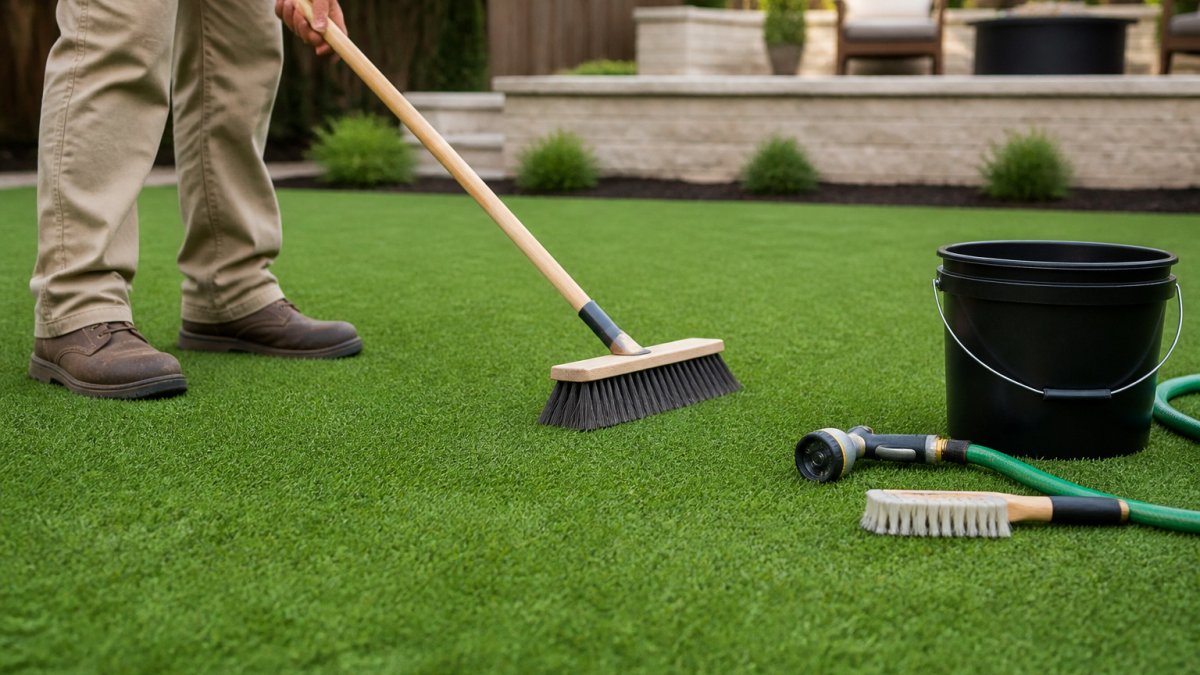
Compaction is not glamorous. Once your turf is installed, learn how to clean your artificial turf in Georgia to protect your investment. It is the difference between a lawn that looks good for years and one that needs rework.
Request a Site Evaluation for Your Turf Project
Every yard is different, and the base that works for a flat backyard may not suit a steep slope. That is why a site evaluation is the right starting point.
A site evaluation typically looks at:
- Soil type and how it drains
- Existing grade and any low spots
- Access for equipment and material delivery
- Sun and shade patterns
- How you plan to use the space
A base specification and turf product should fit your property and intended use. No two installs are identical. The same base principles apply across applications such as backyard turf, pet turf, and putting green turf, each of which places different demands on the surface.
Pricing depends on square footage, excavation, access, grading, drainage, base preparation, and the turf you choose. Contact Artificial Turf Atlanta through our website for current pricing or a project-specific quote.
If you are ready to move from research to a real plan, contact Artificial Turf Atlanta to request a site evaluation. We serve homeowners throughout the greater Atlanta area.
Frequently Asked Questions
Can you lay artificial turf directly on soil?
You can, but we don't recommend it. Bare soil shifts, holds moisture and lets weeds push through, which shortens the life of the turf and creates uneven spots underfoot. A proper artificial turf base, usually compacted crushed stone, gives the surface stability and lets water drain away. In Georgia clay, laying turf straight onto soil almost guarantees standing water after a heavy rain.
What is the best base material for artificial turf?
Crushed aggregate is the standard choice, and we typically use a granite-based stone that compacts tight and drains well. The material needs angular edges so the pieces lock together under compaction rather than staying loose. Avoid rounded gravel, sand alone or dirt. The right artificial turf base material depends on your soil and drainage, which is why we evaluate each yard before specifying anything.
Do you need a weed barrier under artificial turf?
A weed barrier is a useful layer in most installations, laid over the compacted base and under the turf. It blocks weed growth and keeps the infill from migrating down into the stone. It does not replace proper base preparation, though. If the base is thin or poorly compacted, a fabric layer alone won't stop weeds or fix an uneven surface.
How do you make sure artificial turf drains properly?
Drainage starts with grading the subgrade so water moves away from the house and any low spots, then building a permeable crushed stone base with the right slope. On yards with poor drainage or heavy clay, we may add a drainage channel or French drain. The artificial turf drainage base has to be planned before stone goes down, not patched afterward, which is why a site evaluation matters.
Most turf problems trace back to the base, not the turf. If your yard stays muddy, sits on heavy clay, or has a slope that never drains right, the fix starts underground. Artificial Turf Atlanta builds base systems with proper grading, drainage, and compaction, so your installation holds up through Atlanta's rain and heat. Reach out to discuss your property, request a site evaluation, and get a quote built around your yard. Get started today.