 how-to
7 Real Costs an Artificial Turf Cost Calculator Misses
Last Updated: October 30, 2026
Quick Summary
An artificial turf cost calculator only multiplies surface area by a rate, so it misses the real artificial turf cost drivers: excavation, hauling, grading, drainage, compacted aggregate base, access and seams. Accurate pricing requires a site-specific evaluation, especially on Georgia clay where drainage and base preparation vary by yard.
- Measure only the turf area, subtract patios and beds, then add a realistic waste allowance for seams and trimming.
- Turf material is rarely the largest line item on a difficult site; base, excavation and disposal often drive the number.
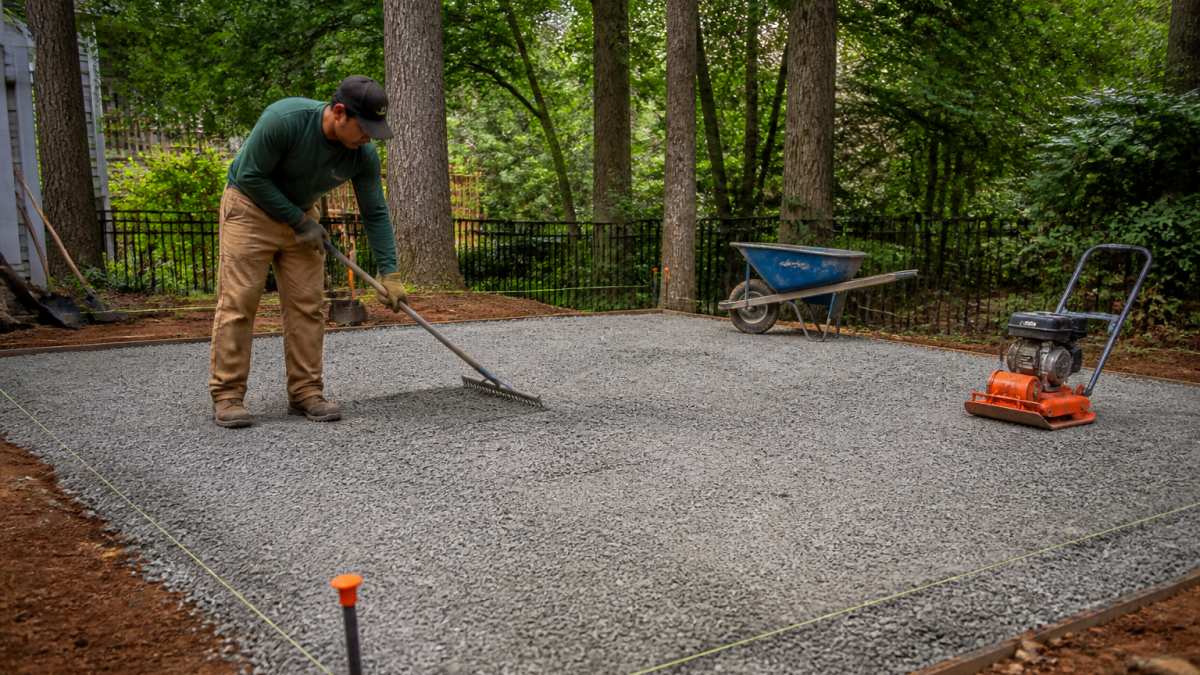
- A typical installation may use roughly a 4-inch prepared aggregate base, but specifications vary by site and drainage needs.
- Georgia clay holds water, so grading and drainage must be designed rather than assumed before turf goes down.
- Two yards of identical square footage can price very differently because of access, slope and soil conditions.
Table of Contents
- Why an Artificial Turf Cost Calculator Only Gets You Close
- Using an Artificial Grass Square Footage Calculator Correctly
- What Drives Artificial Turf Installation Cost Beyond the Turf Roll
- Artificial Turf Base Preparation: The Line Item Calculators Skip
- Artificial Turf Drainage and Georgia Clay: Why Your Yard Sets the Price
- Request a Site Evaluation for an Accurate Turf Quote
- Frequently Asked Questions
Why an Artificial Turf Cost Calculator Only Gets You Close
An artificial turf cost calculator is a useful starting point, but it cannot see your yard. A real installation number is often very different from an online estimate, and the gap almost always comes down to what sits under the grass.
That is not a knock on the tools. They help you set a rough budget and sanity-check a bid.
What Square Footage Actually Tells You
Square footage is the one input every calculator gets right, and the one that matters least on its own. It tells you how much turf surface you have, not how much material has to come out, how much base has to go in, or how hard it will be to get a machine to the work area.
Using an Artificial Grass Square Footage Calculator Correctly
An artificial grass square footage calculator is best used to measure the shape of the job, not to predict the price. Feed it accurate dimensions, add a realistic waste allowance, and treat the result as the surface area you need to cover, nothing more. Here is how a yard can be worked through step by step.
Step 1: Measure the Turf Area, Not the Lot
Measure only the area that will be covered. Exclude beds, patios, pools, structures, and any concrete you are keeping. Walk the perimeter with a tape and sketch it on paper before you use a calculator; a phone app can serve as a rough check.
Step 2: Break Odd Shapes Into Simple Ones
A calculator flattens your yard into a single number. Your installer cannot. Split curved beds, angled property lines, and multi-level yards into rectangles and right triangles, measure each, then add them together.
- Rectangle: length × width.
- Right triangle: (base × height) ÷ 2.
- Curved bed: approximate it as a rectangle, then subtract the corners you know are not turf.
Worked Example: A Rectangular Backyard
Say the usable turf area behind the house measures 40 feet wide by 30 feet deep. That is 40 × 30 = 1,200 square feet. If a paver patio cut into one corner measures 10 feet by 12 feet, subtract 120 square feet, leaving 1,080 square feet of turf surface. That is the number you feed the calculator.
Worked Example: An Irregular, Multi-Zone Yard
Now picture a yard with a main lawn plus a separate side strip and a curved play area.
- Main lawn: 35 × 25 = 875 sq ft
- Side strip: 30 × 6 = 180 sq ft
- Curved play area approximated as a 15 × 12 rectangle = 180 sq ft
Add them: 875 + 180 + 180 = 1,235 square feet of turf surface. Measure each zone separately, because a single blended measurement hides the seams and edges that drive material and labor.
Step 3: Add a Realistic Waste Allowance
Waste allowance deserves its own line. Seams, edge trimming, and pattern matching all consume material, and running short mid-install is far more expensive than ordering slightly over. Turf is typically supplied in rolls, so roll width and turf direction can affect how much you need. Add a waste allowance on top of the measured area, then let your installer confirm the final quantity against the roll layout.
Step 4: Note Slopes and Grade Changes Separately
For slopes, measure the surface distance along the ground, not the flat map distance, because turf follows the ground. A slope means more base, more grading, and sometimes more excavation. Note those details next to your square footage so whoever prices the job sees them.
What the Number Does and Does Not Tell You
Once you have an accurate surface area, you can sanity-check a bid and estimate turf quantity. What the number cannot tell you is how much soil has to come out, how much base has to go in, or how hard it will be to get a machine to the work area. Treat the calculator result as the surface area you need to cover, and let a site evaluation turn it into a real number.
What Drives Artificial Turf Installation Cost Beyond the Turf Roll
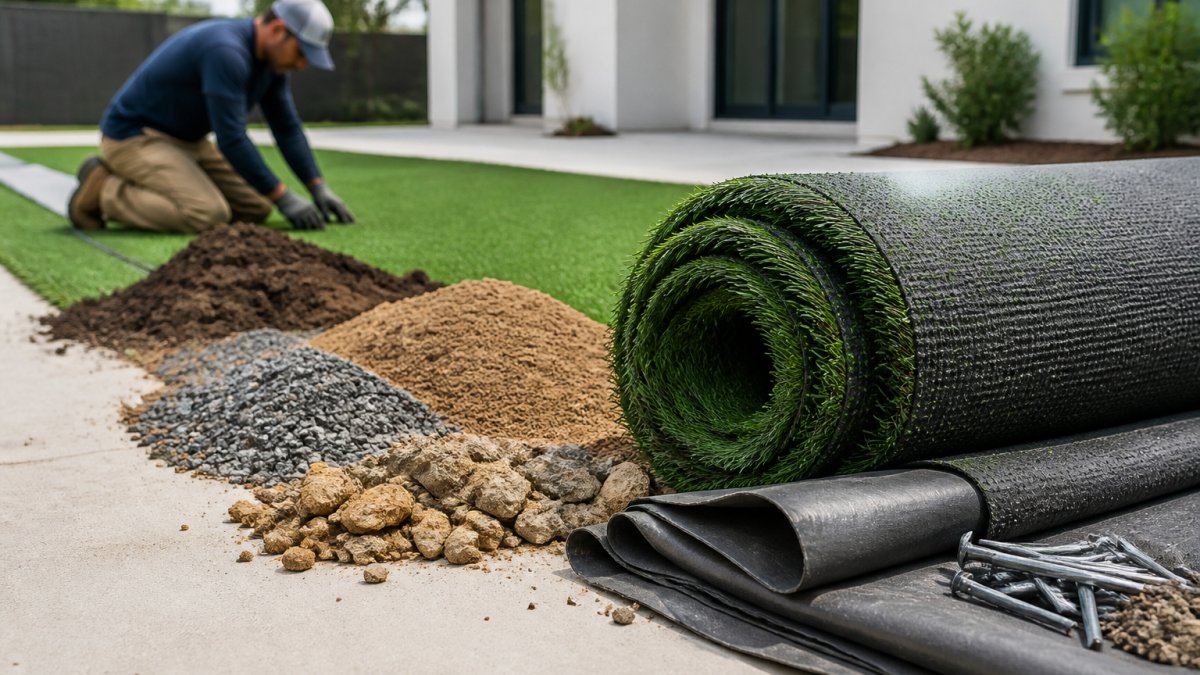
Turf is one line item. The rest of the artificial turf installation cost lives in the ground, the access, and the details. Homeowners are often surprised that the grass itself is not the biggest driver. The clearest way to understand a quote is to see it as a stack of separate line items, each with its own logic.
The Itemized Budget Behind a Turf Quote
- Turf material. Pile height, backing, and product type vary by use, from landscaping to pet areas to putting greens. It is rarely the largest line on a difficult site.
- Waste and roll layout. Seams, edge trimming, and pattern matching consume material; roll width and turf direction determine how much you actually need.
- Removal and disposal. Old grass, soil, and debris have to come out and be hauled away. Cheap bids sometimes leave disposal out.
Why the Same Square Footage Prices Differently
Two yards of identical size can carry very different installation costs. A flat, open backyard with a wide driveway gate is straightforward. The same square footage behind a house with a narrow side yard, a retaining wall, and mature trees is a different job entirely. Access alone can change how a crew moves material, and excavation and disposal scale with how much soil has to leave the property.
How to Read a Bid Line by Line
When you get quotes, ask each contractor to break out the lines above. A bid that is dramatically lower than the others can indicate a thinner base, less compaction, or limited excavation, which may show up later as an uneven, poorly draining surface.
If you are weighing a full yard install, our artificial lawns service covers what a complete build involves. Considering a practice area instead? A custom putting green carries its own cost factors.
Artificial Turf Base Preparation: The Line Item Calculators Skip
Base preparation is a cost that calculators often ignore, and it strongly affects how the turf performs over time. It is also an area where lower bids can cut corners.
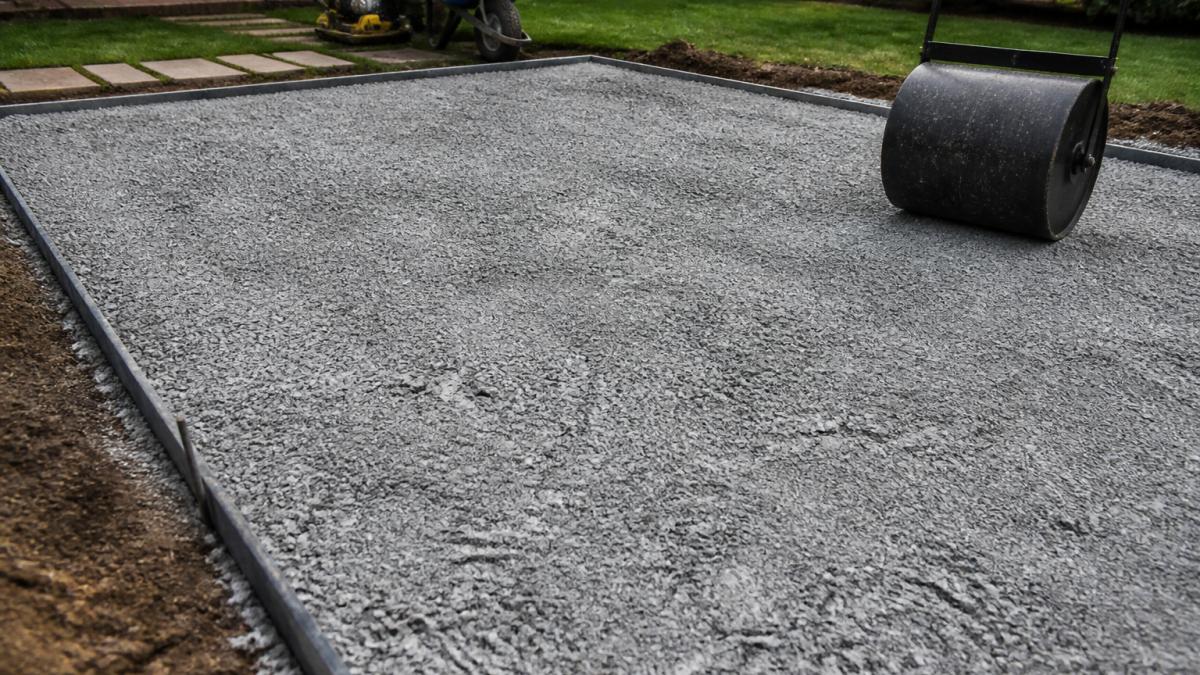
A proper base means excavating to the right depth, grading for drainage, installing and compacting aggregate, and checking the surface is flat and firm before a single roll goes down. Our project gallery shows finished installations where you can judge the base preparation and workmanship for yourself.
Artificial Turf Drainage and Georgia Clay: Why Your Yard Sets the Price
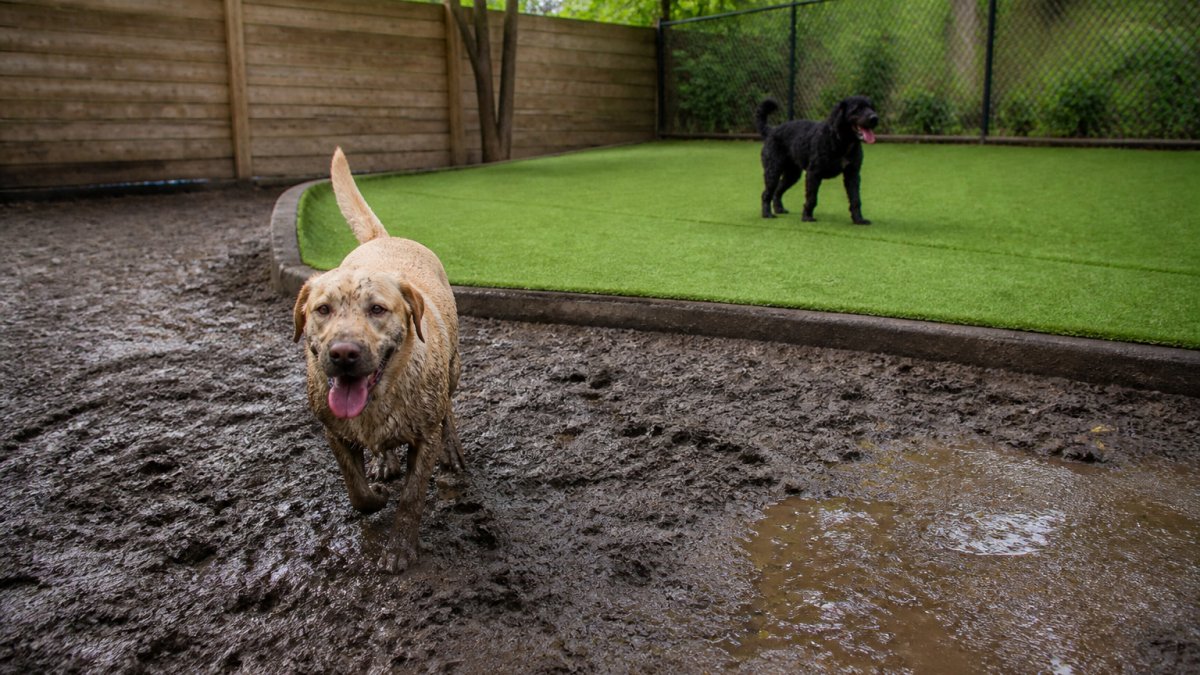
Drainage is where Atlanta yards separate themselves from the generic calculator. Georgia clay does not drain like sandy soil.
Artificial turf drainage needs to be designed, not assumed.
We will not promise turf solves every drainage problem. What we will say is that grading and drainage must be assessed as part of the installation, because on clay, guessing is expensive.
Request a Site Evaluation for an Accurate Turf Quote
A calculator gives you a ballpark. A site evaluation gives you a real number, and it is the only way to price excavation, grading, drainage, base and access for your specific property. If you are ready to move from a rough estimate to an accurate, site-specific quote, contact our team to request a site evaluation.
Want to understand the broader case for turf before you commit? Our guide to going artificial covers the reasoning behind the decision.
Frequently Asked Questions
How much is 2,000 square feet of artificial turf?
There is no single answer, and any calculator that gives you one flat number for 2,000 square feet is guessing. The turf roll itself is only part of the artificial turf cost. Excavation, hauling off old grass, grading, a compacted aggregate base, drainage work, seams, edging, and infill all scale with the site. Two 2,000 square foot yards in the same Atlanta neighborhood can price very differently if one is flat and open and the other slopes, drains poorly, or has tight access. A site evaluation is the only way to get a real number.
What affects the cost of artificial turf installation?
The biggest drivers are square footage, site access, excavation and removal of existing material, grading and slope, drainage requirements, base depth and compaction, turf selection (pile height, backing, and product type), infill, seams and edge work, and the application itself, such as pet turf, a play area, or a putting green. In North Georgia, heavy clay soil and heavy rain often add drainage and base work that a generic calculator never accounts for. Each of these should be broken out in a professional quote.
Does artificial turf need a drainage base?
Yes, in almost every case. Artificial turf drainage depends on what is underneath it. We typically build on a properly prepared and compacted aggregate base, often around 4 inches, but the exact specification varies with the site, existing grade, soil, and how the area will be used. Without a graded, permeable base, water pools under the turf and the surface can stay soggy. Because Atlanta gets heavy rain and a lot of yards sit on clay that drains slowly, drainage and grading have to be assessed as part of the installation, not assumed.
Does removing existing grass increase the cost of artificial turf installation?
It usually does. Removing sod, roots, and old material is a separate step from installing turf, and it involves labor plus hauling the debris off site. On some properties the existing surface can be worked with, but on most residential yards we excavate and remove material to reach the right grade and base depth. Access matters too: if a truck or skid steer cannot get to the area, removal and hauling take longer. That is one reason a square footage calculator alone cannot predict your price.
An online estimate will only ever be as good as the assumptions behind it, and your yard has details no calculator can see. Artificial Turf Atlanta builds installations around proper site preparation, compacted aggregate base, grading and drainage designed for Georgia conditions, and turf selected for how you actually use the space. Get started with Artificial Turf Atlanta and request a site evaluation so your quote reflects your real property, not a national average.